• Skip to main content

Old Varieties

Celebrating and remembering old fruit and vegetable varieties

You are here: Home / Archives for Lesser Spotted Woodpecker

Lesser Spotted Woodpecker

Jan 05 2012

New apple orchard for Gloucestershire

Gloucestershire Wildlife Trust is creating a new fruit orchard using 60 local variety apple, pear and plum trees at the Trust’s Vell Mill nature reserve near Newent.

Over the last 30 years traditional orchards have declined by 67% in the county , and the Trust is calling upon the help of the local community and it’s supporters to take part.

[pullquote]The idea is to make this a living legacy so that when I am no longer here my son will have something to remember me by.
Mrs Jeffries, of Cheltenham[/pullquote]

60 different fruit tree varieties will be planted, including the traditional Gloucestershire varieties, Jackets and Waistcoats, Lemon Pippin and Jacob Plum.

Jan Ryder, Gloucestershire Wildlife Trust’s Community Fundraiser said: “Not only do orchards provide mouthwatering fruits for us to relish, but they are an ideal place for lesser spotted woodpecker and mistletoe to thrive, and we are overjoyed to be creating a new orchard for all to enjoy.”

Many of the trees are being dedicated to individual people, 12 will be planted in recognition of Gloucestershire Wildlife Trust’s past Chairmen, and a number will be planted for the local community.

Mrs Jeffries, of Cheltenham, has dedicated a tree for her son, said: “I am pleased to be able to support this orchard as I feel passionately about preserving old local trees and customs. The idea is to make this a living legacy so that when I am no longer here my son will have something to remember me by.”

All the trees will be given special treatment by being blessed using the old custom of balancing cider-soaked toast on the branches, and adding a trickle of local cider to water the roots.
Written by admin · Categorized: Apples, News · Tagged: Apple Orchard, Chairmen, Cheltenham, Community Fundraiser, Fruit Orchard, Fruit Tree Varieties, Gloucestershire Wildlife Trust, Jeffries, Lesser Spotted Woodpecker, Local Community, Mistletoe, Nature Reserve, Newent, Orchards, Pippin, Plum Trees, Ryder, Trickle, Vell, Woodpecker

Dec 27 2010

Help available for orchard management

Natural England hope that a new guide will curb the demise of the English fruit orchard.

Traditional orchards are a classic feature of the English landscape and are fantastic places for wildlife but they have been disappearing at an alarming rate.

According to Natural England over 75% of traditional orchards in England have vanished since the 1950s.

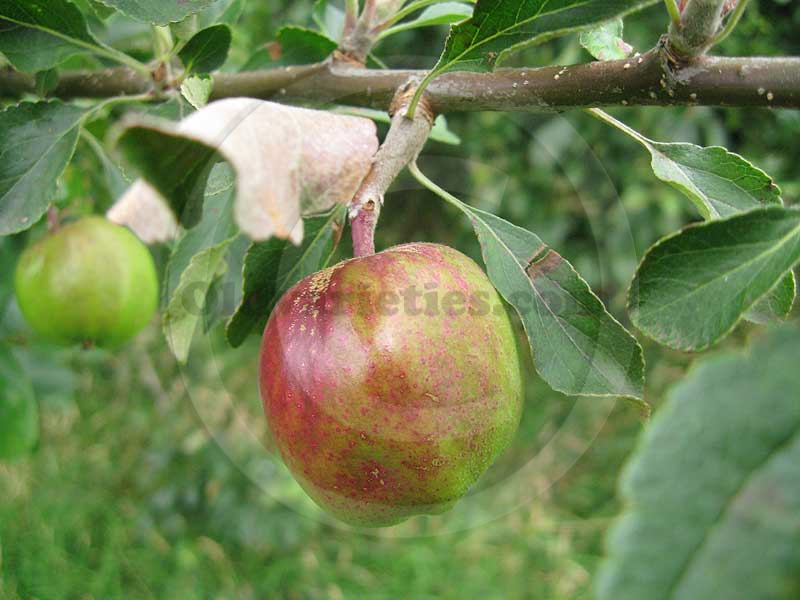
A red apple
New guides produced to help orchard owners

Orchards are home to wildlife

Restoring and managing orchards is good for wildlife and it is hoped the new guides will also help protect the orchard eco-system.

The guides are designed to provide practical advice to land managers on how best to look after orchards in their care and are now available as PDFs  by following the links below.

Orchards are important for a rich biodiversity of flora and fauna and in 2007, traditional orchards received UK Biodiversity Action Plan priority status in recognition of their importance to wildlife.

Wildlife is attracted to the mosaic of habitats such as dead wood, scrub, hedgerows, unimproved grassland and ponds.

Declining bird species such as the lesser spotted woodpecker and bullfinch can thrive in orchard environments, as can a wide diversity of mosses, lichen and fungi and bat species.

Traditional orchards also provide important habitats for the beautiful, but rare noble chafer beetle, that lives in the dead wood of older trees.

Orchard advice guides (.pdf)

  • TIN012 – Traditional orchards: a summary
  • TIN013 – Traditional orchards: site and tree selection – This information note provides guidance on how to select sites for new orchards and the types of tree to plant within new and existing orchards.
  • TIN014 – Traditional orchards: planting and establishing fruit trees -This information note provides guidance on planting in and replanting an orchard and the establishment of new trees.
  • TIN015 – Traditional orchards: an introduction to pruning
  • TIN016 – Traditional orchards: formative pruning of young trees – This information note provides guidance on why young fruit trees require formative pruning and on how to prune them. The main part of the guidance applies mainly to apples and pears, in particular dessert varieties. The final section explains the main differences when pruning other fruit trees.
  • TIN017 – Traditional orchards: maintenance pruning – This information note provides guidance on the reasons for the routine pruning of fruit trees and advice on the different methods of achieving this.
  • TIN018 – Traditional orchards: restoring and managing mature and neglected orchards
  • TIN019 – Traditional orchards: fruit tree health – This information note provides information on identifying, and managing for, the main pests, diseases and nutrient deficiencies that may affect a traditional orchard.
  • TIN020 – Traditional orchards: orchards and wildlife – This provides information on the wildlife found in orchards and gives guidance on how to manage orchards for wildlife.
  • TIN021 – Traditional orchards: glossary

Written by admin · Categorized: Featured, Fruit & Veg · Tagged: Advice Guides, Alarming Rate, Bat Species, Biodiversity Action Plan, Bird Species, Bullfinch, Chafer Beetle, English Landscape, Flora And Fauna, Fruit Orchard, Fruit Trees, Information Note, Lesser Spotted Woodpecker, Orchard Environments, Orchard Management, Orchards, Priority Status, Rich Biodiversity, Tree Selection, Uk Biodiversity Action Plan

Copyright © 2026 ·Altitude Pro on Genesis Framework · WordPress · Log in